
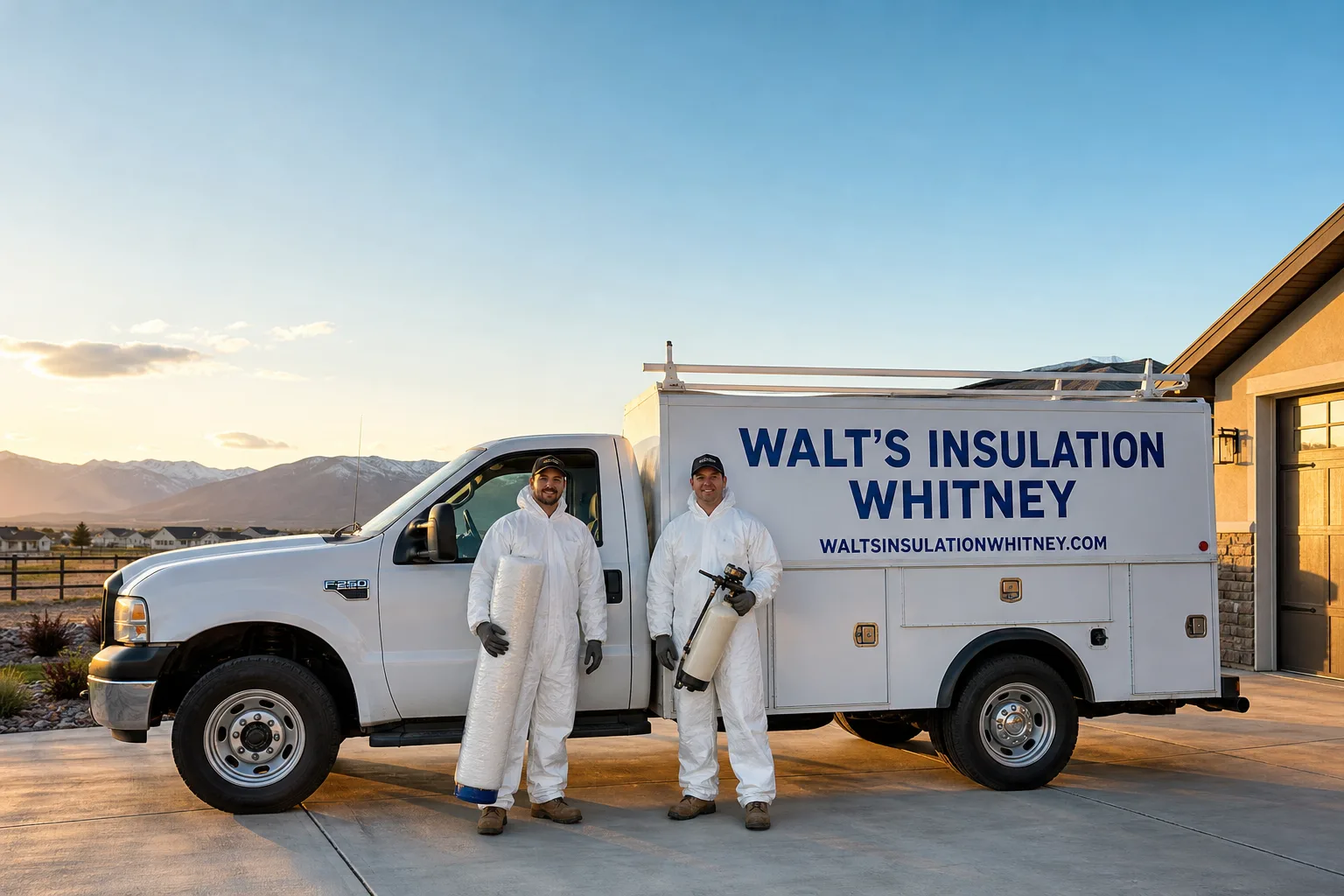
Here’s the focused cost page for attic insulation removal in Whitney, NV, built around the rodent-contamination and failed-barrier angle, with a clear price table, local detail, and the FAQ block.
Attic Insulation Removal Cost in Whitney, NV: What Drives the Price
Attic insulation removal in Whitney typically costs $1,200 to $3,800, but the number is set by why you’re removing it. In Whitney, the two most common triggers are rodent contamination in older tract homes and a failed radiant barrier that’s baked the old fill into a compressed, useless mat. A contaminated HEPA-vacuum job and a clean batt strip-out are not the same scope, and they don’t carry the same price. Call (866) 810-4177 for a free estimate and we’ll tell you which one you actually have.
Key Takeaways
- Whitney removal prices run about $1,200 to $3,800, and the trigger (contamination vs. degraded barrier) is what moves the number.
- Rodent-contaminated blown fill costs more because it needs HEPA vacuuming, bagging, and attic sanitation, not just scooping.
- Removing insulation without re-venting and sealing first is money wasted – the same gaps and heat will ruin the new material the same way.
- Pre-1980 homes in Whitney may have vermiculite or older blown fill that needs lab testing before anyone touches it.
Why Whitney Homeowners Remove Insulation (and What It Costs)
Here’s the part generic cost guides miss: the price of removal is inseparable from the contamination and ventilation work that has to follow. In Whitney, our technicians rarely pull insulation because it’s simply “old.” They pull it because wind-driven Mojave dust and rodents have gotten past vents that were never properly screened, or because a radiant barrier that’s been under 150°F-plus attic heat for twenty years has lost the foil and left the fill matted and discolored. Those two situations look similar from the ladder and cost very differently on the invoice.
Whitney’s housing stock tells the story. The vast majority is stucco-clad tract construction on concrete slabs, built roughly from the 1970s through the 2000s. With no crawlspace or basement, the attic is the one place insulation can actually be serviced – so it takes all the wear. Original batt or early blown fill in these homes has spent decades compressed under extreme summer heat, and bath-fan ducting that was dumped loose into the attic has pumped hot, moist air straight into the material. That’s the failure pattern we see most: not insulation that’s missing, but R-value that’s been ruined in place.
The Line-Item Costs of a Whitney Removal Job
No two attics price the same, but these are the components that make up a Whitney removal, so you can see where your quote is coming from. A free second opinion on any written estimate is always available, and inside our service county there’s no trip charge.
| Cost Component | Typical Range |
|---|---|
| Hand removal of clean, dry batt or blown fill | $1,200 – $2,000 |
| HEPA vacuuming of contaminated or rodent-soiled insulation | $1,800 – $3,200 |
| Bagging and disposal fees (loaded per bag / by volume) | $250 – $600 |
| Attic sanitation and deodorizing (rodent-contaminated) | $400 – $900 |
| Ventilation and duct-routing re-inspection before re-install | $150 – $400 |
| Asbestos / vermiculite lab testing (pre-1980 homes only) | $300 – $700 |
| Full removal with contamination remediation | $1,200 – $3,800 |
HEPA vacuuming versus hand-removal is the single biggest swing on that table. Once rodents have nested in blown fill, the material can’t just be scooped – it has to be contained and pulled under negative pressure so dust and droppings don’t spread through the house. That’s more labor, more bagging, and sometimes sanitation afterward. It’s also not optional. Removing contaminated insulation carelessly is how a removal job turns into a bigger indoor-air problem.
Why Removing Insulation Without Re-Venting First Is a Mistake
This is the detail we insist on, and it’s the one homeowners most often skip to save money. Pulling the old insulation and immediately blowing in new material without addressing the gaps underneath is a waste of the new material. In Whitney’s dusty, high-sun environment, the same unscreened vents and unsealed penetrations that let rodents in and let the old fill compact will do exactly the same thing to fresh insulation within a few seasons.
So re-venting and air-sealing are part of the removal scope, not an upsell bolted on after. Our technicians identify and seal rodent entry points, re-route bath-fan ducting so it actually exhausts outside instead of into the attic, and confirm ventilation is moving air the way it should before anything new goes down. That’s what makes the new system – whether it’s blown-in or spray foam – actually perform. When we install, we work with Johns Manville, Knauf, Rockwool, and CertainTeed products, matched to what your Whitney attic can support.
The Asbestos Question for Pre-1980 Whitney Homes
Most of Whitney’s tract housing is newer than 1980, but there’s a small stock of earlier homes where the original fill may be vermiculite or an older blown product that can contain asbestos. That has to be tested before anyone removes it – no exceptions, no “it’s probably fine.” Testing adds a lab step and a few days to the timeline, and it adds a line to the cost. Skipping it isn’t a shortcut; it’s a hazard, and it can turn a simple removal into a regulated abatement job. If your home dates to the 1970s or earlier, we won’t start a removal until the material has been identified. On high-tension or contaminated removals in general, this is work for a trained professional, not a weekend project – the containment, the equipment, and the disposal rules all matter.
If a rodent problem is the root cause, the removal is only half the fix. Attic and crawl space restoration in Whitney covers the sanitation and proofing that keeps the problem from coming right back.
What Sets Walt’s Insulation Whitney Apart on a Removal Job
Removal is messy, and homeowners have usually been burned before – by vague quotes, no-show crews, or a contractor who disappeared once the check cleared. Our answer to that is simple: we’re locally owned and owner-operated, with a published address and license number, and a live person answers the phone 24/7. No answering service, no voicemail when you’ve got a question about what’s in your attic.
The job isn’t finished when the old material is out. It’s finished when the attic is clean, sealed, and ready for the new system to do its job. Background-checked, uniformed technicians photograph every step, so you see exactly what was found and what was corrected – the rodent runs, the loose duct, the degraded foil, all documented. Every removal falls under the Done Right Promise: if it’s not done right, we make it right, no runaround. That’s not a slogan on a brochure; it’s the reason our technicians document before, during, and after.
Two standing offers worth knowing before you book: $40 off any repair over $200, and a permanent 10% discount for seniors and veterans. Our technicians bring up to 26 years of experience to every attic, and they’ve seen enough Whitney homes to know a contaminated job from a clean one on the first walk-through.
Frequently Asked Questions
Attic insulation removal in Whitney typically runs $1,200 to $3,800, with clean batt or blown-fill strip-outs at the low end and rodent-contaminated jobs needing HEPA vacuuming, sanitation, and disposal at the high end. The trigger – contamination versus a failed radiant barrier – is what moves your number. Call (866) 810-4177 for an exact quote; estimates are free and there’s no trip charge inside the service county.
Covering the old material is only cheaper when it’s clean and dry. If it’s rodent-contaminated or compacted under a degraded radiant barrier, adding new insulation on top traps the problem and wastes the new material. In those cases, removal and remediation cost less over time than a failed re-install. We’ll give you an honest read on which situation you’re in – and a free second opinion on any written estimate.
Yes. If your Whitney home was built before 1980, we arrange lab testing of the existing fill for vermiculite and asbestos before any removal starts. It adds a few days and roughly $300 to $700 to the job, but it’s the only safe path. Call (866) 810-4177 and we’ll walk you through the testing step.
Yes, and it’s not optional. The same unscreened vents and unsealed gaps that let rodents in and let the old fill compact will ruin new insulation the same way. Our technicians re-route loose bath-fan ducting, seal entry points, and confirm ventilation before install. Skipping this is the most common way a re-insulation job fails early. Call (866) 810-4177 to schedule an inspection.
Get a Straight Answer on Your Whitney Removal
Before you commit to a number, get someone who knows Whitney attics to tell you why the insulation needs to come out – contamination or a failed barrier – because the two cost very differently. Call (866) 810-4177 for a free estimate, a live person on the line, and a straight answer on scope. Estimates are free, no trip charge inside the service county.
Written by the team at Walt’s Insulation Whitney, serving Whitney, NV.
What Our Customers Say
"The house had rats in the attic insulation and a smell we could not place. Walt's crew pulled all of it, sealed the gaps where they were getting in, sanitized, and put in new blown-in. He sent photos of the sealed openings so I could see it done."
- Rosa Delgado"Walt came out himself, stuck his head in the attic, and told me I had about four inches where I needed fourteen. No sales pitch, just the number and what it would cost to fix it. Crew was here two days later."
- Carl Meadows"Spray foam in the garage ceiling under the bonus room. That room used to be unusable in summer. Walt talked me out of foaming the whole attic because it did not need it, which saved me a couple thousand and I trust him more for it."
- Bud Larkin